Outage Center

Members can report outages quickly and view current outage maps. Also get safety tips for dealing with outages, information on how the cooperative restores power, and guidance on what to do before, during, and after an outage.

Image
outage center
Image
outage-map

Outage map
 

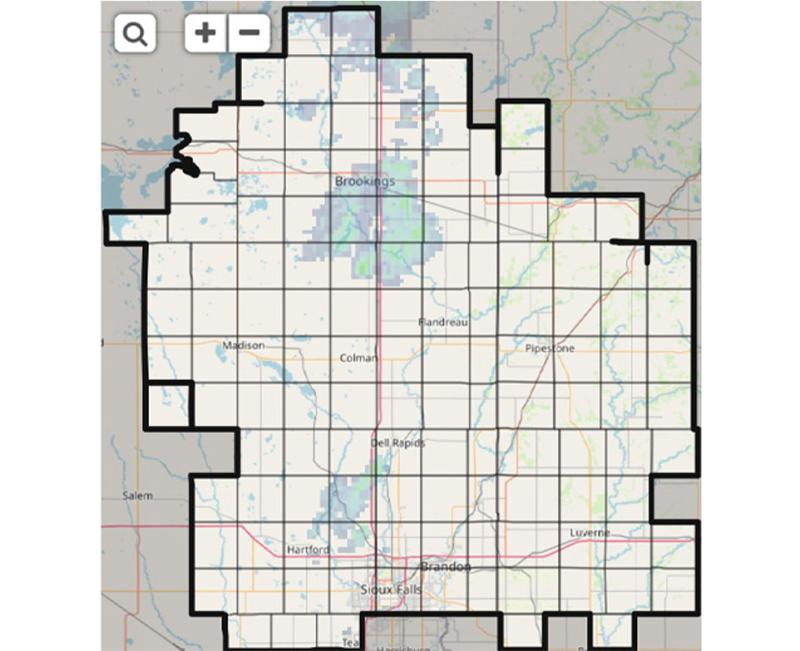
View outage information for Sioux Valley Energy's service area including Brookings, eastern Kingsbury, Lake, Moody and Minnehaha Counties in South Dakota along with Pipestone and Rock Counties in Minnesota.

 

View Outage Map
Image
dispatch-center

Report outage on SmartHub app or call dispatch

Sioux Valley Energy's in-house dispatching service runs 24 hours, seven days a week, 365 days a year. Our dispatchers are standing by to answer your outage call (800) 234-1960 or you can report the issue on the SmartHub app. Do not use social media to report outages.
Report Outages
Image
Inside the Grid Logo

Inside the Grid Podcast
 

How are overhead or underground power line outages identified, and what happens when an outage call comes into Sioux Valley Energy? Jay Buchholz talks with two experts on these issues: Ted Smith, Sioux Valley Energy Vice President of Operations and Engineering, and Sharla Haugen, Manager of Dispatch Operations.
Listen Now

Why did my lights blink?

Image
Blinking light gif

Strong wind can cause tree branches or other debris to brush power lines, which can result in blinking or flickering lights. 

When you see several consecutive blinks, the system is working the way it was designed. Somewhere on the line there is a fault, which is a temporary, abnormal electrical current. The system closes in several times consecutively to try and clear the fault. If the fault isn’t cleared, the breaker opens and there is a power outage. 

If your electricity goes out and stays out for more than a minute, you'll want to report an outage using the SmartHub app or by calling our Dispatch Center at 1-800-234-1960. 
What To Do If You Lose Power

Image
Icon electric box

Check your home's breaker panel (and any outdoor disconnects if you are familiar with where they are) to make sure the outage is not due to a tripped breaker. Click to watch a video on how to check your circuit breaker.
Image
Neighborhood

Call your neighbors to see if their power is off. This will help you determine if the problem exists within your home or in a wider area.

Image
Cell phone

Call (800) 234-1960 To report an outage; you can also report an outage through SmartHub.

How Power Is Restored

Think safety when operating a generator

Follow these tips from Safe Electricity to properly operate your generator:

  1. Read and follow all manufacturer operating instructions to properly ground the generator. Be sure you understand them before hooking up the generator.
     
  2. Never operate a generator in a confined area, such as a garage. Generators can produce numerous gases, including toxic and deadly carbon monoxide. They require proper ventilation.
     
  3. Generators pose electrical risks especially when operated in wet conditions. Use a generator only when necessary when the weather creates wet or moist conditions. Protect the generator by operating it under an open, canopy-like structure on a dry surface where water cannot form puddles or drain under it. Always ensure that your hands are dry before touching the generator.
     
  4. When you refuel the generator, make sure the engine is cool to prevent a fire, should the tank overflow.
     
  5. There should be nothing plugged into the generator when you turn it on. This prevents a surge from damaging your generator and appliances.
     
  6. Be sure to keep children and pets away from the generator, which could burn them.
     
  7. Shut down the generator properly. Before shutting down a generator, turn off and unplug all appliances and equipment being powered by the generator.
     
  8. Remember maintenance between uses. It is also a good idea to inspect the fuel and oil filters, spark plug, oil level and fuel quality and to start the generator on a regular basis before an emergency situation occurs.

For more information on electrical safety, visit safeelectricity.org.
Image
2024_07_ds_causesofoutages_rgb

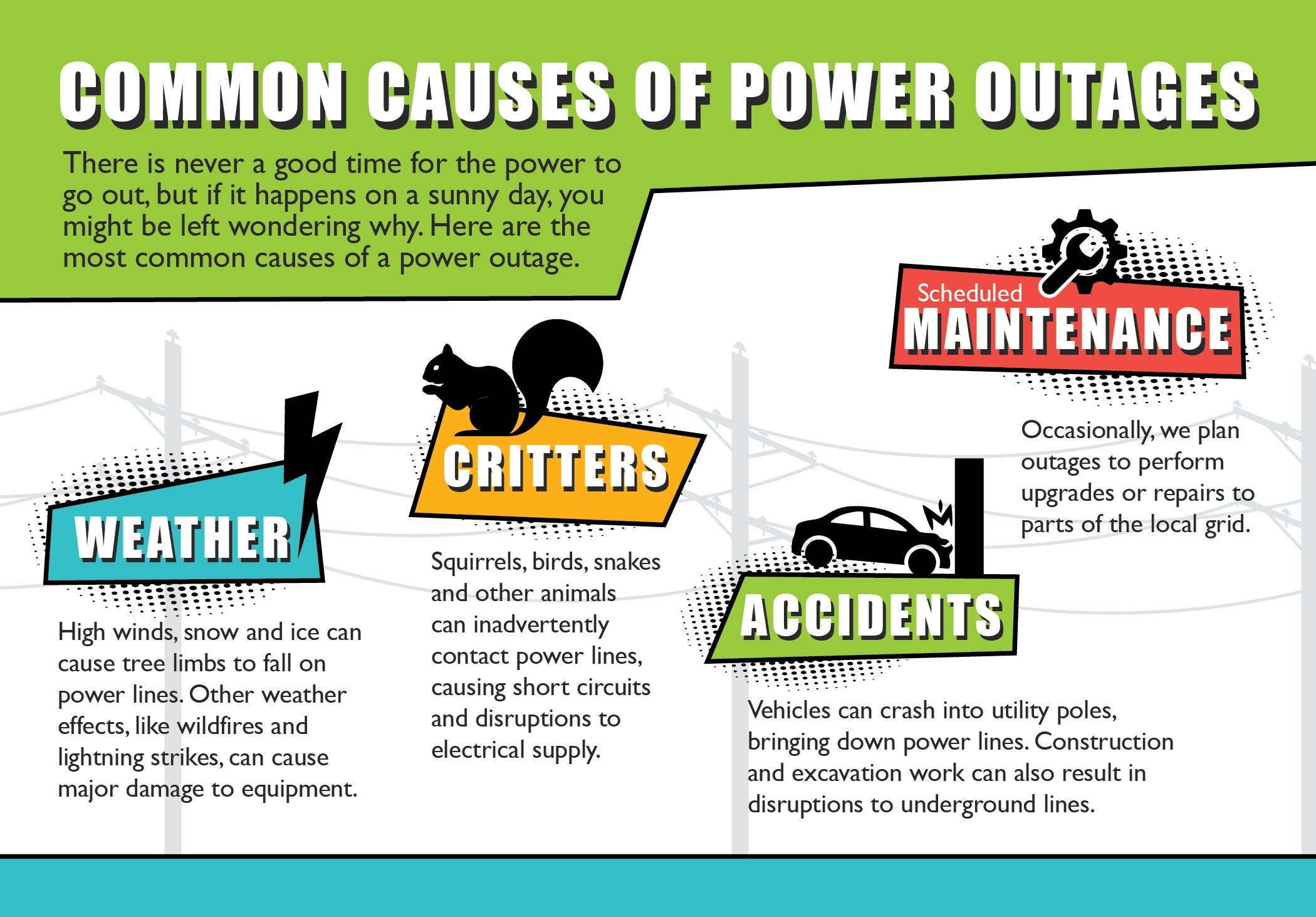
Power disruptions can occur from a variety of causes. 

Common causes include:

  1. Weather
     
  2. Vehicles
     
  3. Curious critters
     
  4. Scheduled maintenance

Whatever the reason, Sioux Valley Energy crews are ready to respond and get your power back on as quickly and safely as possible.
Image
storm-prep-checklist-qtr-pg

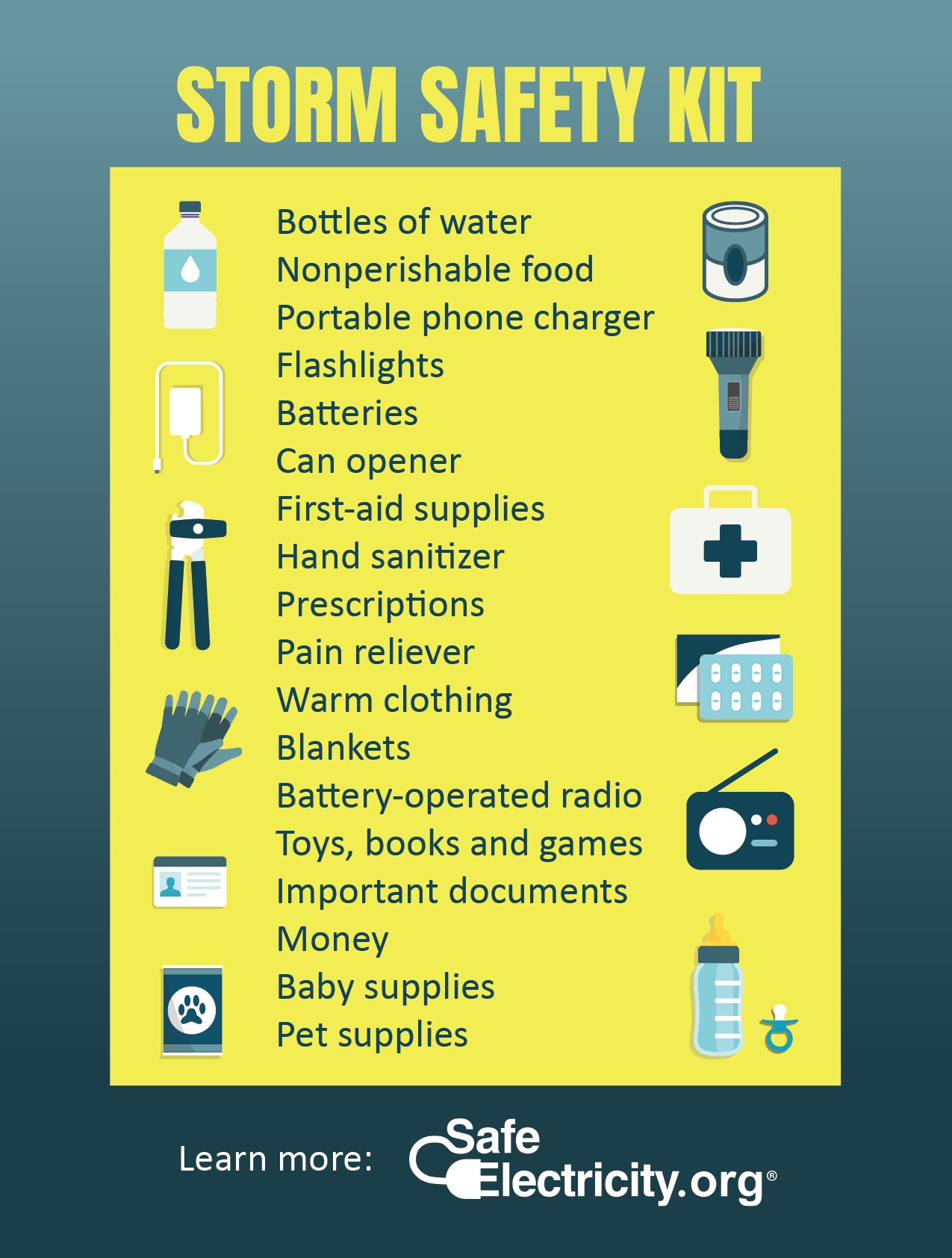
Prepare a kit for power outages. It should include:

  1. Flashlights with fresh batteries.
     
  2. Wood for a properly ventilated fireplace.
     
  3. First aid kit, prescription medicines and baby supplies.
     
  4. Nonperishable food and a manual can opener.
     
  5. A  fully charged cell phone and battery pack.
     
  6. Bottled drinking water.
     
  7. Battery-powered emergency lights and radio.

To prepare for emergencies, the CDC recommends: 

  1. Keep appliance thermometers in your refrigerator and freezer. 
    The refrigerator should be at 40°F or below. 
    The freezer should be at 0°F or below.
     
  2. Freeze containers of water and gel packs to help keep food at 40°F or below.
     
  3. Have a cooler and frozen gel packs ready in case you have to remove food from the refrigerator to keep it cold.
     
  4. Buy dry ice or block ice to keep food cold in the refrigerator if you think the power could be out for a long time.