3-Tiered System and Demand

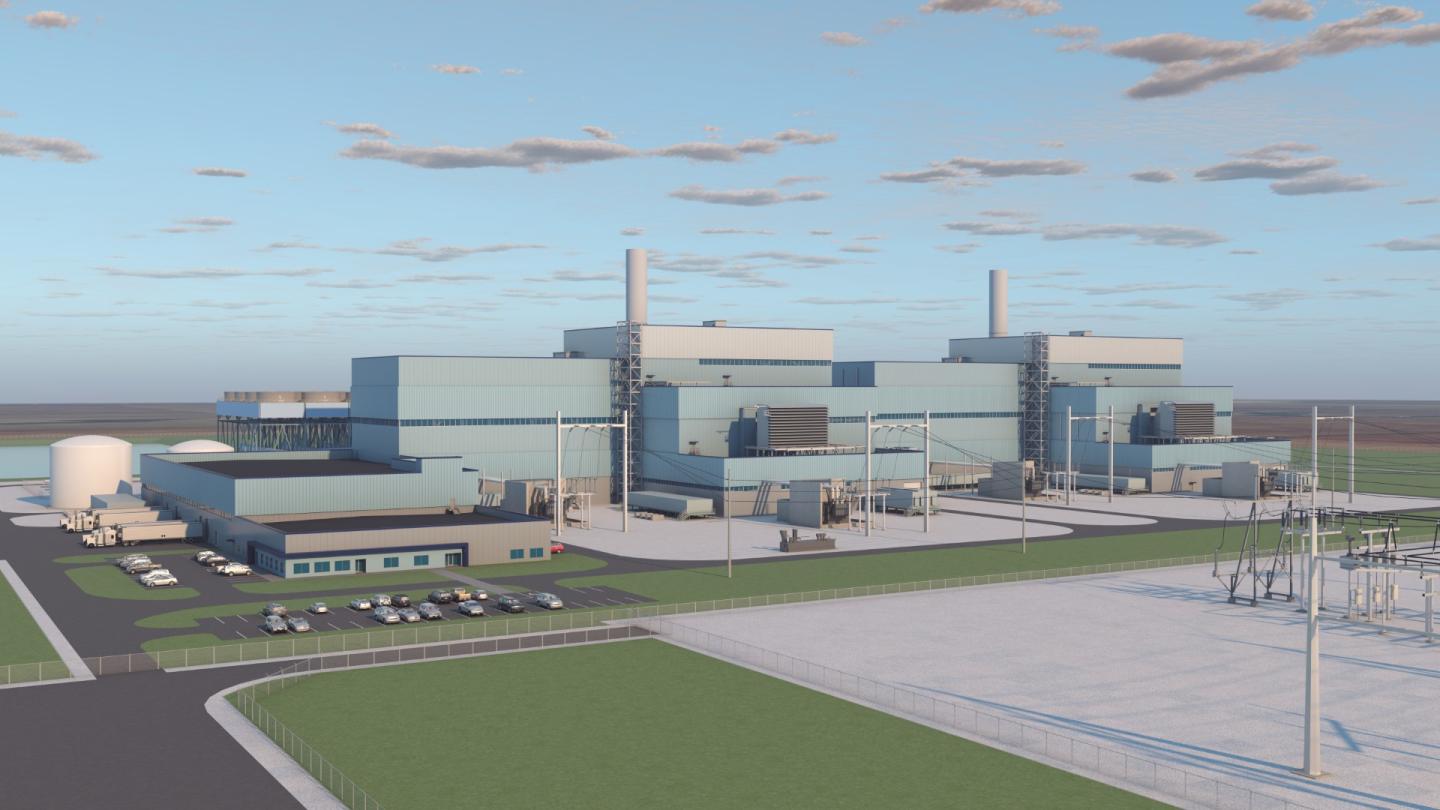
Basin Electric Power Cooperative (Basin Electric) is set to build a new natural gas-fueled generation facility in Williams County, North Dakota, pictured in this artist’s rendering. The nearly $4 billion project, called the Bison Generation Station to be constructed near the town of Epping, will produce approximately 1,490 megawatts (MW) of electricity, one of the largest electric generation projects in the cooperative’s history.

Above: Basin Electric Power Cooperative (Basin Electric) is set to build a new natural gas-fueled generation facility in Williams County, North Dakota, pictured in this artist’s rendering. The nearly $4 billion project, called the Bison Generation Station to be constructed near the town of Epping, will produce approximately 1,490 megawatts (MW) of electricity, one of the largest electric generation projects in the cooperative’s history. Comprising two units of roughly 700 MW each, the facility will help meet electric load growth in the region that stems from industrial work, manufacturing, residential members, and small businesses, including farms and ranches.

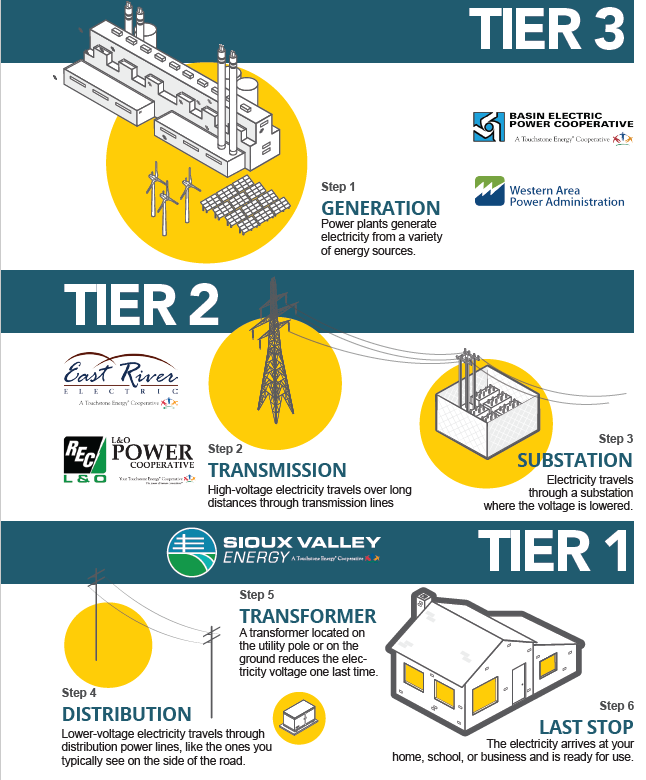
The power grid is a complex system. For electric co-ops in this part of the country, the system is owned and maintained on three different levels or tiers. 

The parts you see close to home such as meters, green boxes, lines, and poles, are just a small portion called the distribution system. That’s the part of the system that Sioux Valley Energy is responsible for.

The bigger power lines and substations that scatter the landscape are part of the second tier called transmission. The Cooperative’s power suppliers, East River Electric Power Cooperative and L&O Power Cooperative, represent the transmission tier. 

The third level of the system is the power generator. Basin Electric Power Cooperative generates electricity from a diverse energy mix including coal, natural gas, wind, and solar.
Image
3-tiered system graphic June 2026

Sioux Valley Energy is a member of all the power cooperatives that make up the second and third tiers. Additional power comes from the Western Area Power Administration (WAPA) which generates electricity from dams on the Missouri River.

Sioux Valley Energy pays a power bill to East River Electric Power Cooperative and L&O Power Cooperative. East River and L&O then pay a power bill to Basin Electric Power Cooperative and the Western Area Power Administration.

All three levels of the cooperative network: distribution (SVE), transmission (East River Electric and L&O Power), and generation (Basin Electric and WAPA) have to build an electrical system that can support the maximum amount of power needed at any given moment. These investments come at a cost. 

To more closely align with how Sioux Valley Energy is billed by its power suppliers, the Cooperative will begin charging residential and general service members a demand charge next year. That demand charge will be based on the members’ highest level of electricity used during the billing period.

To learn more, visit Sioux Valley Energy’s dedicated demand webpage.